



Teething 101: What's Actually Happening in Your Baby's Mouth
Teething 101: What's Actually Happening in Your Baby's Mouth
It's more than sore gums and sleepless nights — here's the fuller story, and how to help.
Teething gets blamed for a lot. Fussiness, drool-soaked shirts, nights that feel endless — it's the catch-all explanation for anything going sideways in the first year. But there's a quieter, more interesting story happening beneath the surface, and understanding it can change how you think about this whole stretch of early parenthood.
It starts long before the first tooth
Here's the part that surprises most parents: your baby begins preparing for teething around three months old — months before any tooth is visible. This is when babies enter what feeding specialists call "mouthing," reaching for and chewing on safe toys, fingers, and their own hands.
It isn't idle chewing. Speech-language pathologist Diane Bahr, author of Nobody Ever Told Me (or My Mother) That!, explains that this early biting and gnawing stimulates the gums and actually supports teeth arriving on schedule. Babies who get less of this early mouthing tend to see their teeth come in later than babies who chew and bite often.
"Giving your baby something safe to chew on isn't just comfort during teething — it's part of how the teeth get there in the first place."
A rough timeline worth knowing
No two babies follow the exact same script, but there's a fairly reliable order most teeth follow on their way in:
A little early, a little late, or slightly out of order isn't usually cause for concern — but if something feels off, it's worth a mention at your next pediatrician or dental visit.
So... is all that drool normal?
Mostly, yes. Drooling tends to ride alongside two things at once — teething and new motor development. You'll often see more of it when your baby is mouthing a toy, learning to roll or crawl, or discovering new things to do with their hands. As they gain control over each new movement, the drooling tied to it tends to fade, even while teething-related drooling continues on its own timeline.
What's worth flagging to your pediatrician is drooling that feels excessive without an obvious cause, or that hasn't let up much by age two.
The speech connection nobody mentions
This is the part that rarely makes it into teething advice: chewing and biting during this stage does double duty. It works the gums, yes — but it's also exercising the exact jaw and mouth muscles your baby will later rely on for speech sounds. Around five to six months, babies enter what Bahr calls "discriminative mouthing," moving toys around inside the mouth to learn about texture, shape, and temperature. Children who get less of this kind of exploration, she notes, often turn out to be later talkers.
Put simply — the teether in your diaper bag is doing more than soothing sore gums.
How to actually help
Go cold, not frozen
A chilled teether can numb sore gums beautifully. Fully frozen is often too harsh on tender tissue.
Rotate shapes and textures
Different textures give more well-rounded sensory input, and tend to hold a baby's interest longer than one single toy.
Stay close by
Always supervise chewing and mouthing, and choose teethers sized and built specifically for babies.
Fold it into routines already in place
Bath time, tummy time, quiet play — these are natural, low-effort windows for safe chewing.
A few to keep in rotation
Variety in shape and texture supports better mouth exploration — here's what to reach for.
Flip Flop Teether
An easy-to-grip shape for early mouthing and hand-to-mouth practice.
Shop Flip FlopNarwhal Bath Teether
Doubles as a bath toy — chewing becomes part of a routine baby already loves.
Shop NarwhalDinosaur Teether
Textured surfaces offer varied feedback for gums at different stages.
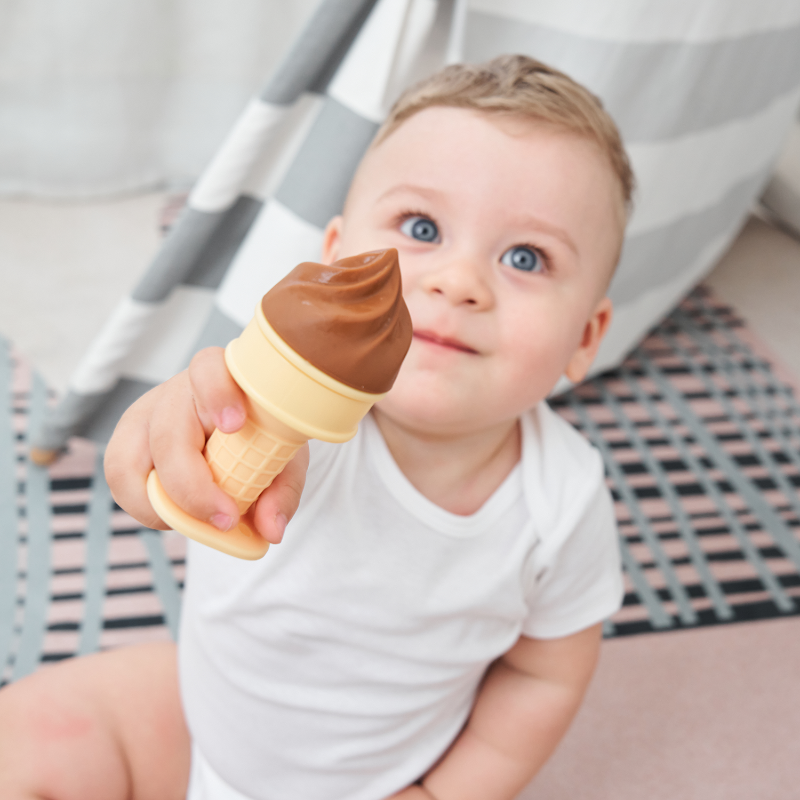
Shop DinosaurFreezable Ice Cream Teether
Chills in the fridge for extra relief during the toughest teething days.
Shop Ice CreamTeething can feel like something to just get through. But it's really your baby's mouth doing quiet, important work — work that shapes not only their teeth, but the muscles they'll use to eat, and eventually, to talk. Giving them safe, varied things to chew on is one of the smallest things you can do that carries the most weight.
Soothing, safe teethers for every stage of the journey.
Shop TeethersThis piece draws on feeding and mouth-development research summarized by Diane Bahr, MS, CCC-SLP, in Nobody Ever Told Me (or My Mother) That! Everything from Bottles and Breathing to Healthy Speech Development (Sensory World, 2010). For general education only — not a substitute for guidance from your pediatrician or dentist.
Leave a comment