



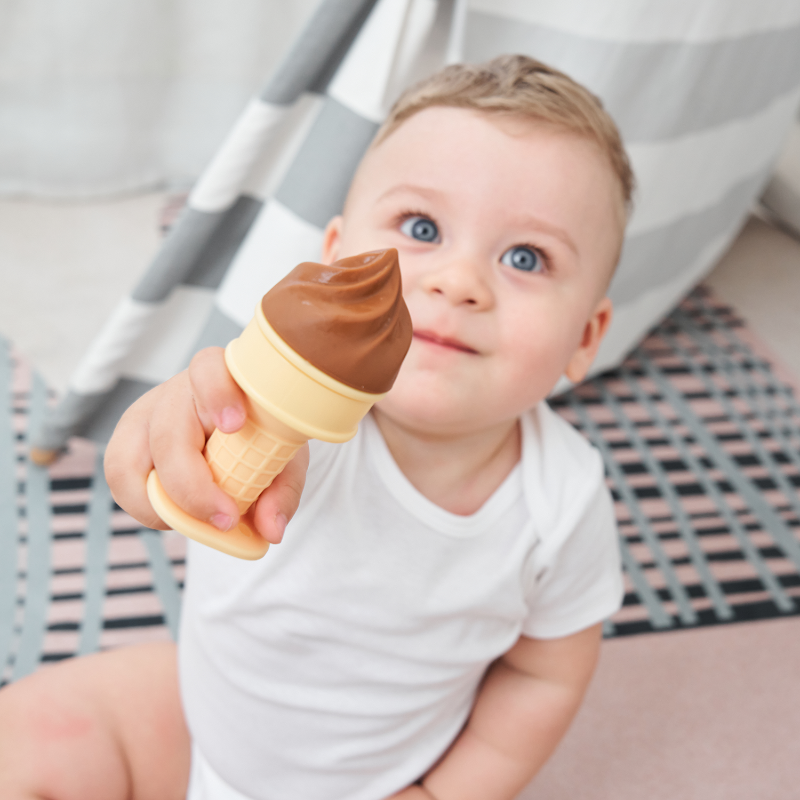
Is Silicone Safe for Babies? Everything Parents Need to Know About Food-Grade Silicone
Baby Safety · Parent Guide
Is Silicone Safe for Babies? Everything Parents Need to Know About Food-Grade Silicone
You've seen it on every baby product label — "food-grade silicone," "BPA-free," "FDA certified." But what does any of it actually mean? And more importantly: is silicone really safe for your baby to chew on, eat from, and be around every single day?
As a new parent, you're right to ask. You're making dozens of purchasing decisions for a tiny human who puts everything in their mouth — and the materials those things are made from matter enormously. This guide gives you the complete, honest picture on silicone safety so you can make confident decisions without the anxiety spiral.
✅ Quick Answer
Yes — food-grade silicone is safe for babies.
Food-grade silicone is chemically inert, free from BPA and other toxic plasticizers, and FDA-recognized as safe for food contact. It does not leach harmful chemicals when chewed, heated, or sterilized. It is widely considered the safest material available for baby teethers, feeding bowls, and other oral-contact baby products — far superior to conventional plastic.
What Is Silicone, and Where Does It Come From?
Silicone is a synthetic polymer made from silicon — a naturally occurring element found in sand and rock — combined with oxygen, carbon, and hydrogen. Despite what the name suggests, it is not the same as silicon (the semiconductor used in computer chips), and it has no relation to the silica found in glass.
The result of combining these elements is a remarkably stable, flexible, and heat-resistant material that sits somewhere between rubber and plastic in its physical properties — but is fundamentally different in its chemical behavior from both.
Industrial Silicone vs. Food-Grade Silicone
Not all silicone is the same. This is the most important distinction for parents to understand:
-
⚠️
IndustrialIndustrial Silicone Used in construction sealants, lubricants, and machinery. May contain fillers, additives, and chemical accelerants that are not safe for human contact. This is not what baby products are made from. -
✅
Food-GradeFood-Grade Silicone Produced to a much higher purity standard, free from fillers and harmful additives. Approved for direct food contact by regulatory bodies including the US FDA. This is what safe baby products — teethers, bowls, spoons, and bibs — are made from. -
✅
MedicalMedical-Grade Silicone The highest purity tier — used in surgical implants, catheters, and medical devices. Some premium baby products, including Smily Mia's Penguin Buddy, use liquid platinum silicone that approaches medical-grade purity.
When buying any baby product, look specifically for "food-grade silicone" — not just "silicone." The grade matters. If a product only says "silicone" without specifying food-grade or providing certification documentation, approach with caution.
What Is BPA and Why Does BPA-Free Matter for Babies?
BPA stands for bisphenol A — a synthetic chemical compound used since the 1950s to harden plastic and make it more durable and transparent. It was used widely in baby bottles, sippy cups, plastic food containers, and teethers for decades before research revealed a serious problem.
BPA is an endocrine disruptor. This means it mimics estrogen in the body, interfering with the hormonal system. In adults, this is concerning. In babies — whose hormonal systems are in a critical stage of development — it's significantly more so. Research has linked BPA exposure in infants to disruptions in brain development, behavioral changes, early puberty, and increased risk of certain health conditions later in life.
What About BPA Replacements — BPS and BPF?
When BPA was phased out from many products, manufacturers often replaced it with structurally similar chemicals: BPS (bisphenol S) and BPF (bisphenol F). Emerging research suggests these carry similar hormonal disruption risks. This is why the gold standard for baby products isn't just "BPA-free" — it's free from all bisphenols, which food-grade silicone naturally achieves since it uses no bisphenol compounds at all.
A product labeled "BPA-free plastic" may still contain BPS or BPF, which have similar hormonal effects. Food-grade silicone doesn't use any bisphenol compounds — not BPA, BPS, or BPF — which is why it's the superior material choice for baby products compared to any type of plastic.
Food-Grade Silicone vs. Plastic: A Complete Safety Comparison
Parents often ask whether silicone is "really" safer than plastic — or whether it's just a marketing angle. Here's the evidence-based comparison across every dimension that matters for baby products:
| Safety Factor | 🟣 Food-Grade Silicone | 🔴 Conventional Plastic |
|---|---|---|
| BPA Content | None — naturally BPA-free | Often contains BPA or BPA replacements (BPS/BPF) |
| Phthalates | None — no plasticizers needed | Often added to soften plastic — linked to hormonal disruption |
| PVC | Not used in silicone products | Common in soft plastics — releases dioxins when heated |
| Lead | Absent in certified food-grade silicone | Present in some low-quality plastics and dyes |
| Chemical Leaching | Does not leach under normal or high-heat use | Can leach chemicals when heated, scratched, or aged |
| Heat Resistance | Stable up to 200°C+ — safe to boil and sterilize | Degrades and leaches more at high temperatures |
| Microwave Safety | Food-grade silicone is microwave-safe | Most plastics are not truly microwave-safe for babies |
| Durability | Does not crack, chip, or degrade over time | Scratches, cracks, and harbors bacteria in crevices |
| Texture Safety | Soft, flexible — gentle on gums and teeth | Hard plastics can damage developing gums |
| Environmental Impact | More durable = longer lifespan, less frequent disposal | Single-use plastics create significant waste |
| FDA Status | FDA-recognized safe for food contact | Varies significantly by plastic type and additives |
Across every meaningful safety category, food-grade silicone outperforms conventional plastic for baby products. The difference isn't marginal — it's substantial. For a product your baby will chew on for hours every day, the material choice is one of the most important decisions you'll make.
What Does FDA Certified Actually Mean for Baby Products?
"FDA certified" is a phrase you'll see on many baby products — but what does it actually guarantee? And is there a difference between "FDA certified" and "FDA approved"?
FDA Approved vs. FDA Compliant vs. FDA Certified
These three terms are often used interchangeably but mean different things. Understanding the distinction helps you evaluate product claims accurately:
-
LowerFDA Compliant The product was manufactured using materials that are on the FDA's list of approved substances. It does not mean the FDA tested or reviewed this specific product — only that the materials used are theoretically permissible.
-
MidFDA Approved The FDA has reviewed and approved the product itself — this level of scrutiny is primarily reserved for pharmaceuticals and medical devices, not consumer goods.
-
HigherFDA Certified (Food Contact) The material has been tested and confirmed to meet FDA standards for direct food contact — meaning it's safe for a baby to put in their mouth, chew on, and have contact with food or liquid. This is the standard that matters for baby teethers and feeding products.
What Does TÜV Certification Add?
TÜV is a German technical testing organization that certifies products to European safety standards — which are often more stringent than US standards in some categories. A product carrying both FDA and TÜV certification has been independently tested and verified by two separate bodies in two regulatory frameworks. This dual certification is a strong indicator of genuine safety rigor, not just label claims.
FDA Certification
Confirms the material meets US standards for food contact safety. Means the silicone has been tested and verified safe for products that touch food, liquid, or a baby's mouth.
TÜV Certification
Independent European safety testing body. TÜV certification confirms the product meets rigorous EU safety standards — often considered more comprehensive than US standards for chemical safety.
BPA / PVC / Lead Free
Specific declarations that the three most concerning chemical groups for baby products are entirely absent. Look for all three on any product label.
Phthalate Free
Phthalates are plasticizers used to soften plastic — linked to hormonal disruption in developing infants. Food-grade silicone products should carry this declaration explicitly.
Legitimate certifications can be verified. Look for a certification number on the packaging, visit the brand's website to confirm their testing documentation, or search the FDA's database directly. Vague claims like "meets safety standards" without specifying which standards or who certified them are red flags.
🏆 About Smily Mia's Safety Standards
Why Smily Mia's Certifications Are the Real Deal
Smily Mia was founded by Paul — a single father who created the brand after his daughter Mia missed her mouthing phase as an infant. From day one, the brand was built around one principle: every product must be genuinely safe for the baby it's designed for. That means no shortcuts on materials, no cutting corners on certification.
Every Smily Mia product is made from food-grade silicone with a unique soft formula — the brand's own description is that it's "as soft as skin to the touch." That's not just a marketing line — it reflects a specific material standard they've developed and maintained since the brand launched.
Is It Safe for Babies to Chew on Silicone?
This is the most direct concern for parents of teething babies, and the answer is straightforwardly yes — with one important condition: the silicone must be food-grade.
Food-grade silicone is chemically inert. This means it does not react with saliva, stomach acid, or food. It does not break down into smaller particles under normal chewing conditions. It does not release chemical compounds when squeezed, heated, or compressed — unlike many plastics, which can release plasticizers under mechanical stress.
What About Silicone Particles from Chewing?
A common concern among careful parents is whether vigorous chewing could release silicone microparticles. Peer-reviewed research indicates that food-grade silicone, under normal use conditions, does not fragment into harmful microparticles the way that degraded plastic does. The material's cross-linked polymer structure gives it a durability that maintains integrity under sustained mechanical stress — including an enthusiastic six-month-old doing their best to bite through it.
What About Silicone Allergies?
True silicone allergies are exceptionally rare — far rarer than latex allergies, which affect approximately 1–6% of the general population. If your baby has a confirmed latex allergy, silicone is almost always the recommended alternative for teething products since it is naturally latex-free.
Even durable food-grade silicone should be replaced if you notice visible cracking, tearing, discoloration, or changes in texture. Damaged silicone — while still chemically safe — can harbor bacteria in crevices and should be retired. Smily Mia's one-piece seamless designs specifically eliminate the gaps where bacteria typically accumulate.
How to Verify a Baby Product Is Genuinely Safe — 6 Steps
With so many products claiming to be "safe," "non-toxic," and "BPA-free," here's a practical checklist to verify those claims actually hold up before you buy:
-
1Check the material specification explicitly. The product should say "food-grade silicone" — not just "silicone." If it says "plastic" or omits the material entirely, move on.
-
2Look for named certifications. FDA food contact certification, TÜV, ASTM F963 (US toy safety standard), or EN71 (EU toy safety) should be listed by name — not just implied. Look for a certification number where possible.
-
3Confirm the BPA-free claim covers all bisphenols. Ideally the packaging says BPA, BPS, and BPF free — or specifies food-grade silicone, which contains none of these by design.
-
4Check for phthalate and PVC declarations. Both should be explicitly listed as absent for any product going in your baby's mouth regularly.
-
5Inspect the construction. One-piece seamless designs are safer than multi-part products with joins, glue, or detachable components. Avoid any product that requires assembly or has parts smaller than a 35mm circle.
-
6Research the brand's track record. Look for the product's safety history — years in market, volume sold without safety incidents, reviews from parents. A brand like Smily Mia with nearly a million teethers sold across 20+ countries and zero safety incidents is a meaningful data point.
Smily Mia's Food-Grade Silicone Products: Built to These Exact Standards
Every product in the Smily Mia range is built to the safety standards described in this article — FDA certified, TÜV certified, BPA/PVC/lead/phthalate-free, one-piece seamless construction, and made from food-grade silicone with no additives or fillers. Here's a snapshot of what's available:
⭐ 0–6 Months
Penguin Buddy Teething Mitten
Liquid platinum silicone — the softest and purest silicone formula. FDA + TÜV certified. Wrist-worn, never-drop design for newborns.
Shop Penguin Buddy →⭐ 0–3 Months
Little Mushroom Teething Mitten
Ultra-light food-grade silicone with a seamless one-piece design. BPA, PVC, lead and phthalate free. For the earliest teething stage.
Shop Little Mushroom →⭐ 3 Months+
Norman Dinosaur Silicone Teether
Food-grade silicone teething ring with multi-texture chew surface. Easy-grip chunky body. FDA certified, BPA-free, dishwasher-safe.
Shop Norman Dinosaur →⭐ 4 Months+
Ice Cream Cooling Teether
Water-filled, freezable, food-grade silicone with thermal protection. FDA certified — the safest cooling teether option for peak teething discomfort.
Shop Ice Cream Teether →Beyond teethers, Smily Mia's baby feeding collection — including suction bowls, plates, and spoons — is made from the same food-grade silicone standard. For a baby who's both teething and starting solids, the entire daily contact surface is covered by the same material integrity.
Frequently Asked Questions About Silicone Safety for Babies
Is food-grade silicone toxic if a baby swallows small pieces?
Food-grade silicone is chemically inert and passes through the digestive system without releasing toxic compounds. However, any product that has cracked or broken into pieces large enough to pose a choking hazard should be removed immediately. Silicone teethers with one-piece seamless designs are specifically built to prevent fragmentation.
Can you sterilize silicone baby products by boiling?
Yes — food-grade silicone is heat-stable and can be safely sterilized by boiling in water for 3–5 minutes without degrading or releasing chemicals. Most food-grade silicone products are also dishwasher-safe on the top rack. Always check the manufacturer's specific guidance, but this is true for all Smily Mia silicone products.
Is silicone better than natural rubber for baby teethers?
Food-grade silicone is generally preferred over natural rubber for most babies for three reasons: it is latex-free (natural rubber contains latex, which can cause allergic reactions), more durable and resistant to cracking, and easier to sterilize. Natural rubber can also harbor mold inside hollow designs if moisture is trapped. Silicone's solid, seamless construction eliminates this risk.
How can I tell if a product is really food-grade silicone?
One practical test: pinch and twist the silicone. If it turns white at the fold, it likely contains fillers (usually cheap calcium carbonate) that indicate lower-grade silicone. Pure food-grade silicone maintains its color when flexed. Always check for named certifications (FDA, TÜV) on packaging and verify the brand's documentation where possible.
Are silicone baby bowls safe for hot food?
Yes — food-grade silicone is heat-stable to 200°C+ and does not leach chemicals when in contact with hot food or liquid. This makes it far safer than plastic bowls for hot purees and meals. Smily Mia's silicone feeding bowls are microwave-safe, dishwasher-safe, and designed for daily food contact at all temperatures.
What is the difference between silicone and BPA-free plastic for baby products?
BPA-free plastic removes one specific chemical but may still contain other bisphenols (BPS, BPF) or phthalates that have similar hormonal disruption effects. Food-grade silicone contains none of these compounds by its fundamental material composition — it doesn't require plasticizers at all. Silicone is also more durable, easier to sterilize, and does not degrade or leach when scratched or heated the way plastics can.
The Bottom Line
Food-grade silicone is not just safe for babies — it is the safest widely available material for products that go in your baby's mouth every day. It contains no BPA, no phthalates, no PVC, and no lead. It doesn't leach chemicals when chewed, heated, or sterilized. It's softer on developing gums than plastic, more durable, and far easier to keep genuinely clean.
When you see "FDA certified food-grade silicone" on a baby product — especially when that's backed by TÜV certification and a track record of zero safety issues across nearly a million products sold — that's not just a label. It's a meaningful guarantee about what your baby is putting in their mouth.
That's the standard Smily Mia has held since day one. And for a product that spends hours in your baby's mouth every day, it's the only standard worth accepting.
Shop Certified-Safe Baby Products
Every Smily Mia product is FDA certified, TÜV tested, and made from food-grade silicone — BPA, PVC, lead and phthalate free. Shop with complete peace of mind.
Shop Teethers → Shop Baby Feeding
Laissez un commentaire